Welcome To Ainsdale Dental!

Crowns & Bridges
What is a dental crown?
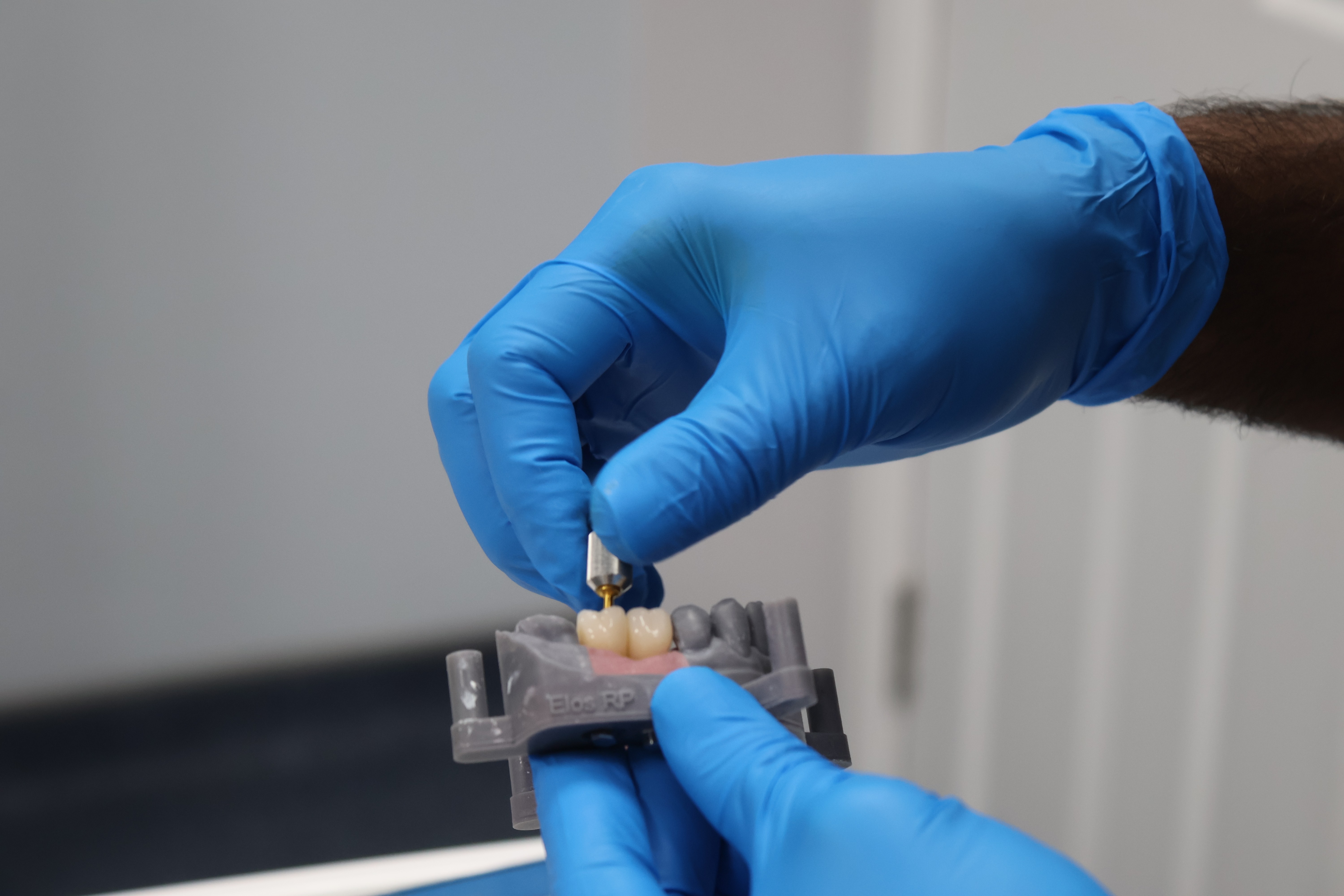
The purpose of a dental crown, is to restore a damaged or severely decayed tooth, protecting and prolonging the longevity and restoring its function. A dental crown is a tooth-shaped protective cap which is placed over the tooth to restore its shape, size, strength, and appearance.
When Is a Crown Needed?
• To protect a weak tooth (e.g., after a large cavity or root canal).
• To restore a worn down or broken tooth.
• To cover a tooth that has a large filling in, meaning there is little natural tooth remaining, increasing its weakness.
• To anchor a dental bridge or cover a dental implant.
• For cosmetic improvements (e.g., discoloured or misshapen teeth).
Benefits of a crown:
Durability and strength, increasing the longevity
Protects the tooth from further damage
Natural appearance, enhancing aesthetics
Restoring the function and comfort
Type of crown materials:
The type of material is often determined on what the dentist thinks is the best for the patient and the circumstances. The position of the tooth, is often taken into consideration, as teeth further back, may require a material which is the most durable. The dentist will discuss all options with patients and incorporate this into the treatment plan.
Porcelain / ceramic
Porcelain fused to metal
All metal (gold)
Zirconia
Procedure Overview:
Two appointments are often required for a crown to be prepared and placed.
The first appointment:
The tooth is prepared and the dentist reshapes the tooth and takes an impression or a digital intra oral scan, to record for the laboratory to prepare. At the preparation appointment, a temporary crown is also made, and worn for 1–2 weeks while the permanent crown is made in the laboratory.
The second appointment:
After this duration, the permanent crown is placed and cemented or bonded to the prepared tooth.
Care Tips:
• Brush and floss as normal
• Avoid very sticky or hard foods that might dislodge or crack the crown
• See your dentist regularly for checkups
Dental Bridges
What is a Dental Bridge?
A dental bridge, closes the gap which has been formed from a missing tooth. It is replaced with a false tooth, and uses the support from the teeth beside the gap, and this is done by bonding the false tooth onto the natural teeth, either side of the gap. There are various different bridges, for individual circumstances;
Types of dental bridges-
Traditional bridge- these are supported by crowns placed on the natural teeth on both sides of the space.
Cantilever bridge- these are supported by a crown only on one side of the space.
Maryland bridge- these type of bridges use a metal or porcelain framework boded onto the back of the adjacent teeth beside the gap, offering support.
Implant supported bridges- these involve placing dental implants for support, rather than the use of natural teeth.
Benefits of a Dental Bridge?
Lifespan: A bridge should last for many years as long it is cleaned daily and your gums are healthy.
Aesthetics: They give a natural appearance and also Martians the shape of the face.
Restoring smiles: enhances chewing ability and function.
Prevents movement of teeth: teeth naturally try and shift into spaces created from missing teeth, therefore restoring the space, prevents teeth shifting.
Procedure Overview:
Two appointments are often required for a bridge to be prepared and placed.
The first appointment:
The tooth / teeth are prepared and the dentist reshapes the tooth and takes an impression or a digital intra oral scan, to record for the laboratory to prepare. At the preparation appointment, a temporary bridge is also made, and worn for 1–2 weeks while the permanent one is made in the laboratory.
The second appointment:
After this duration, the permanent bridge is placed and cemented or bonded to the prepared tooth / teeth.
Type of materials used:
The type of material is often determined on what the dentist thinks is the best for the patient and the circumstances. The position of the tooth, is often taken into consideration, as teeth further back, may require a material which is the most durable. The dentist will discuss all options with patients and incorporate this into the treatment plan.
Porcelain / ceramic
Porcelain fused to metal
All metal (gold)
Zirconia
Care Tips:
• Brush and floss as normal
• Avoid very sticky or hard foods that might dislodge or crack the bridge
• See your dentist regularly for checkups
Crowns & Bridges Q&A – Restorative Dentistry in Southport
Q: What are crowns and bridges?
Crowns strengthen damaged teeth, while bridges replace missing ones by attaching to neighbouring teeth or implants.
Q: When might I need a crown or bridge?
If you have broken, worn, or missing teeth, dental crowns or bridges in Southport can restore strength and appearance.
Q: What materials are used?
Porcelain, zirconia, or metal alloys — all durable and natural-looking options.
Q: How long do they last?
With good hygiene, crowns and bridges can last 10–15 years or longer.
Q: Do crowns and bridges hurt?
No, treatment is carried out under local anaesthetic for your comfort.
BACK TO SERVICE